Ludlow
A week-long HF holiday includes a day off (when the three-day holiday people leave and the four-day people arrive). So goodbye to the lovely Dorset rambling group and hello to a 40-person choral group who meet at HF houses twice a year to sing together.
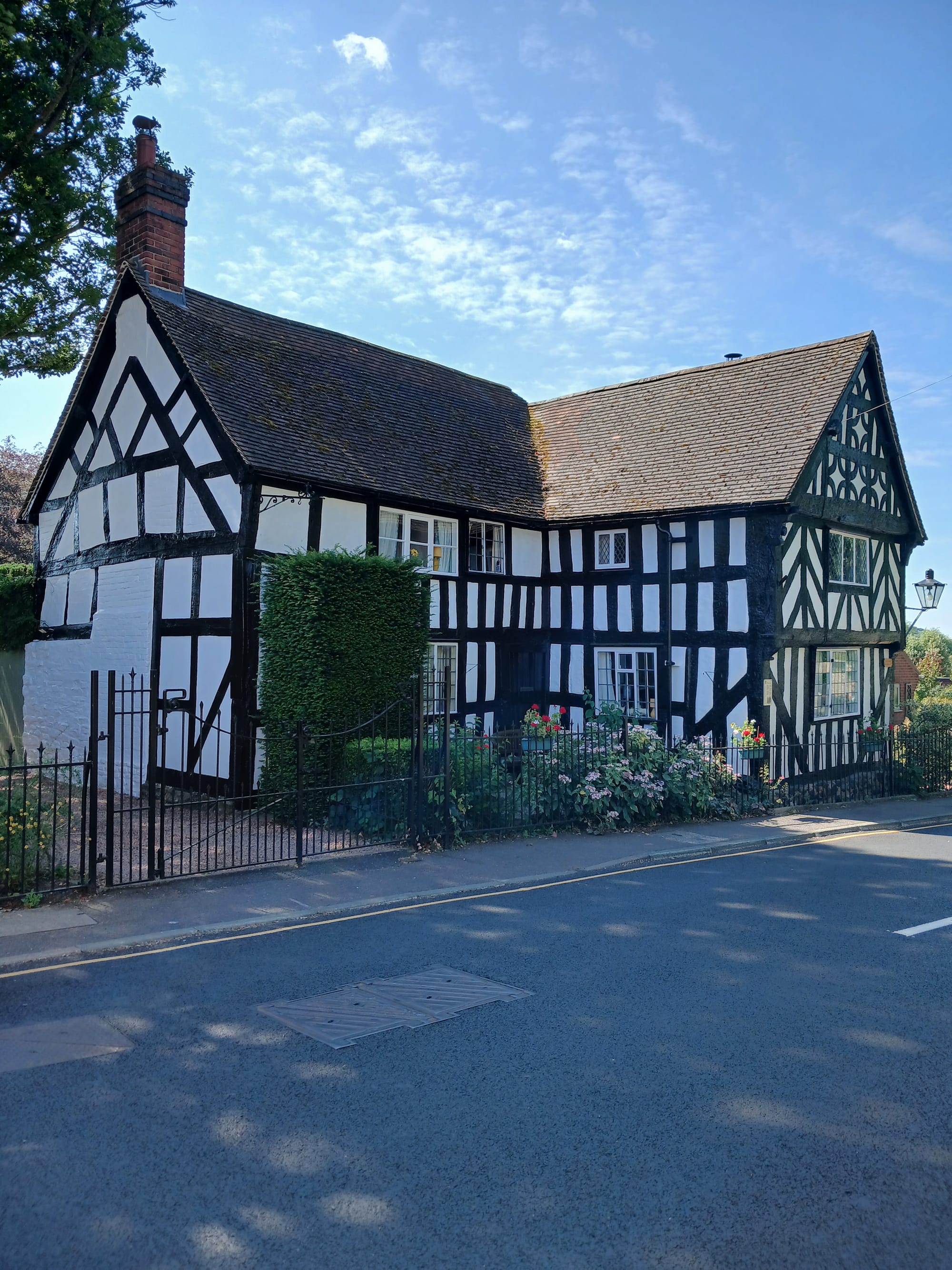
My day started with a walk around Church Stretton. Below is a typical building in these villages.
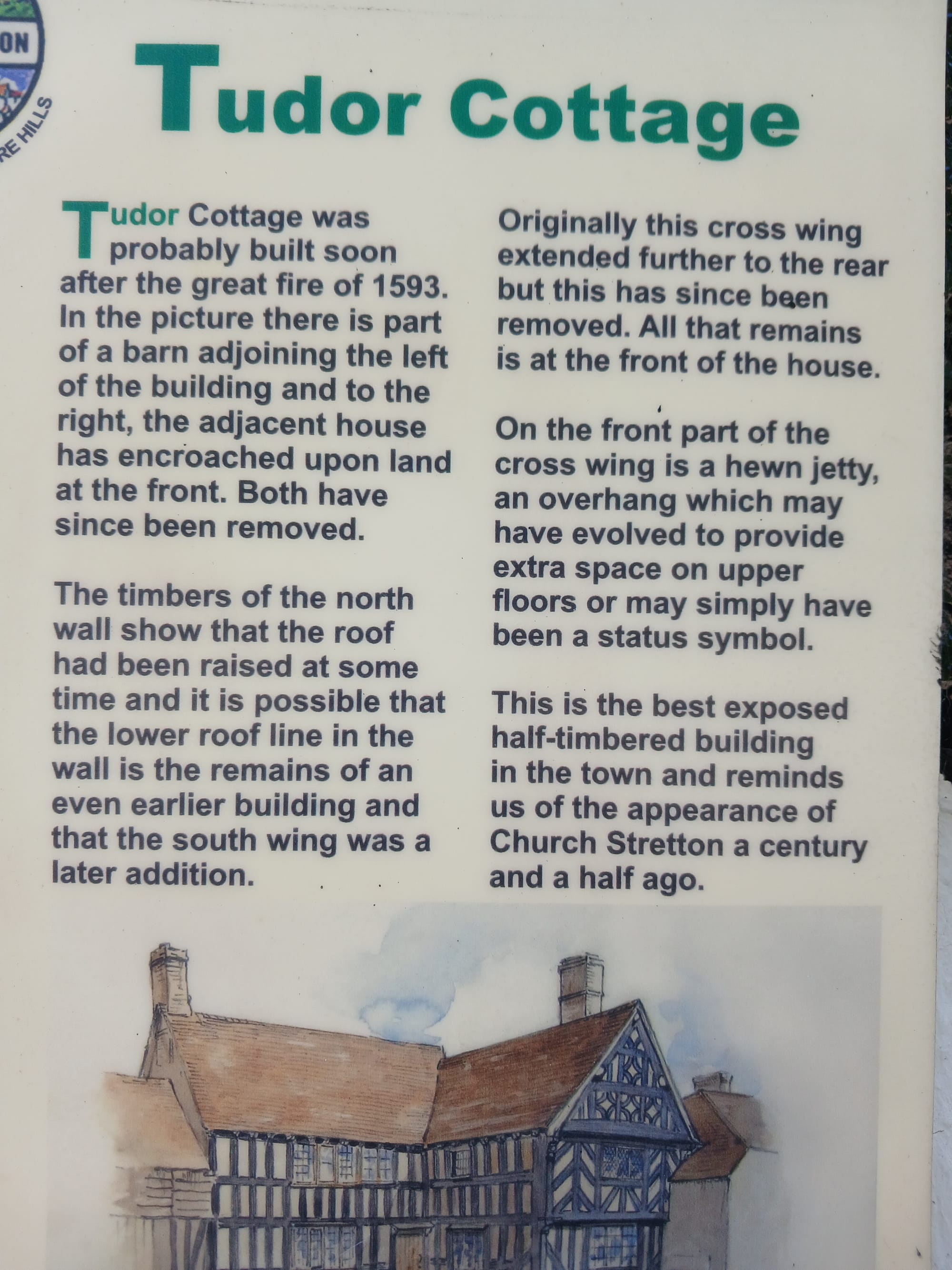
And its description.
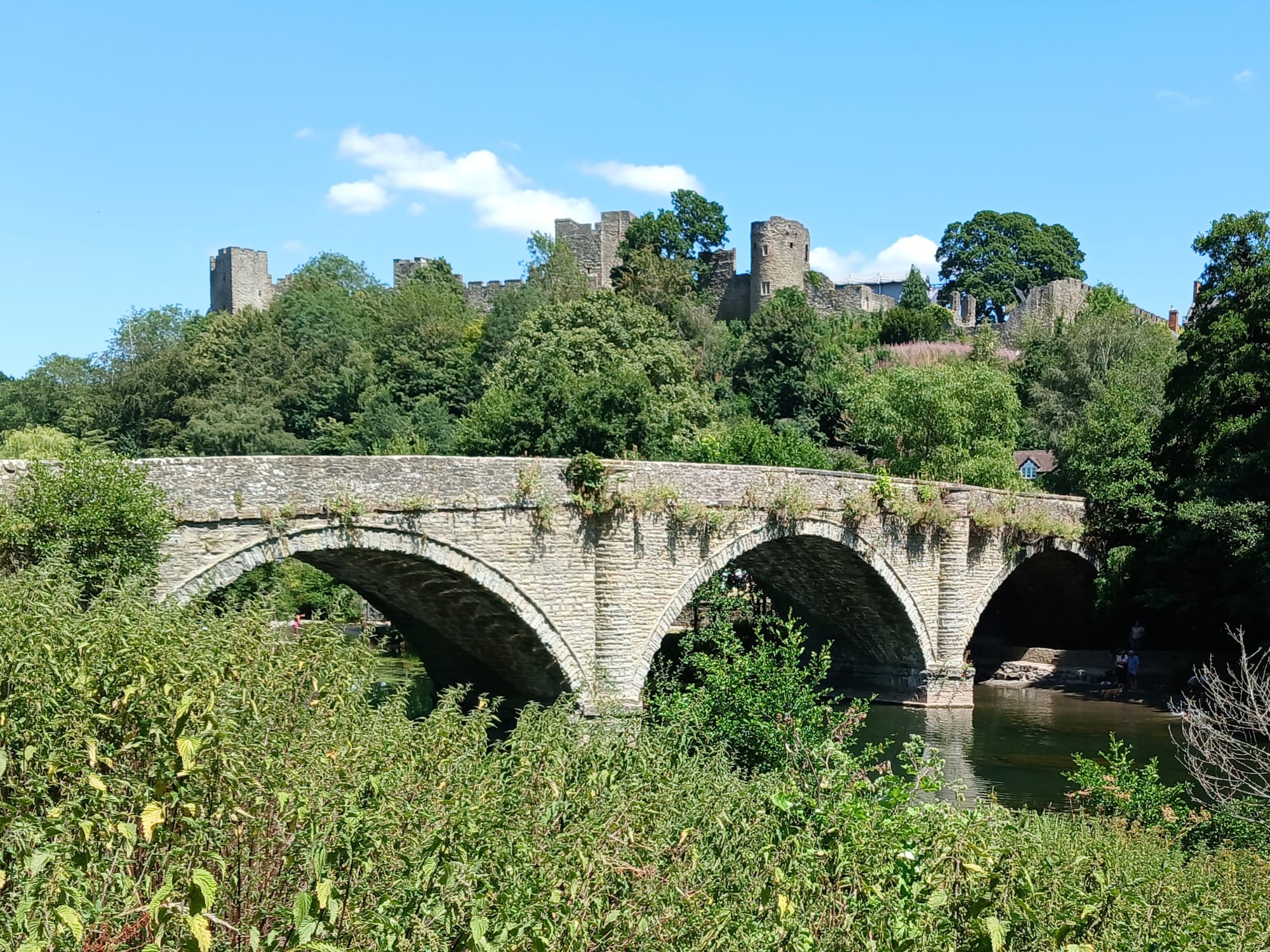
Then I took a bus to Ludlow, which is dominated by Ludlow Castle, above the River Teme. Unfortunately the castle was closed due to a series of summer concerts.
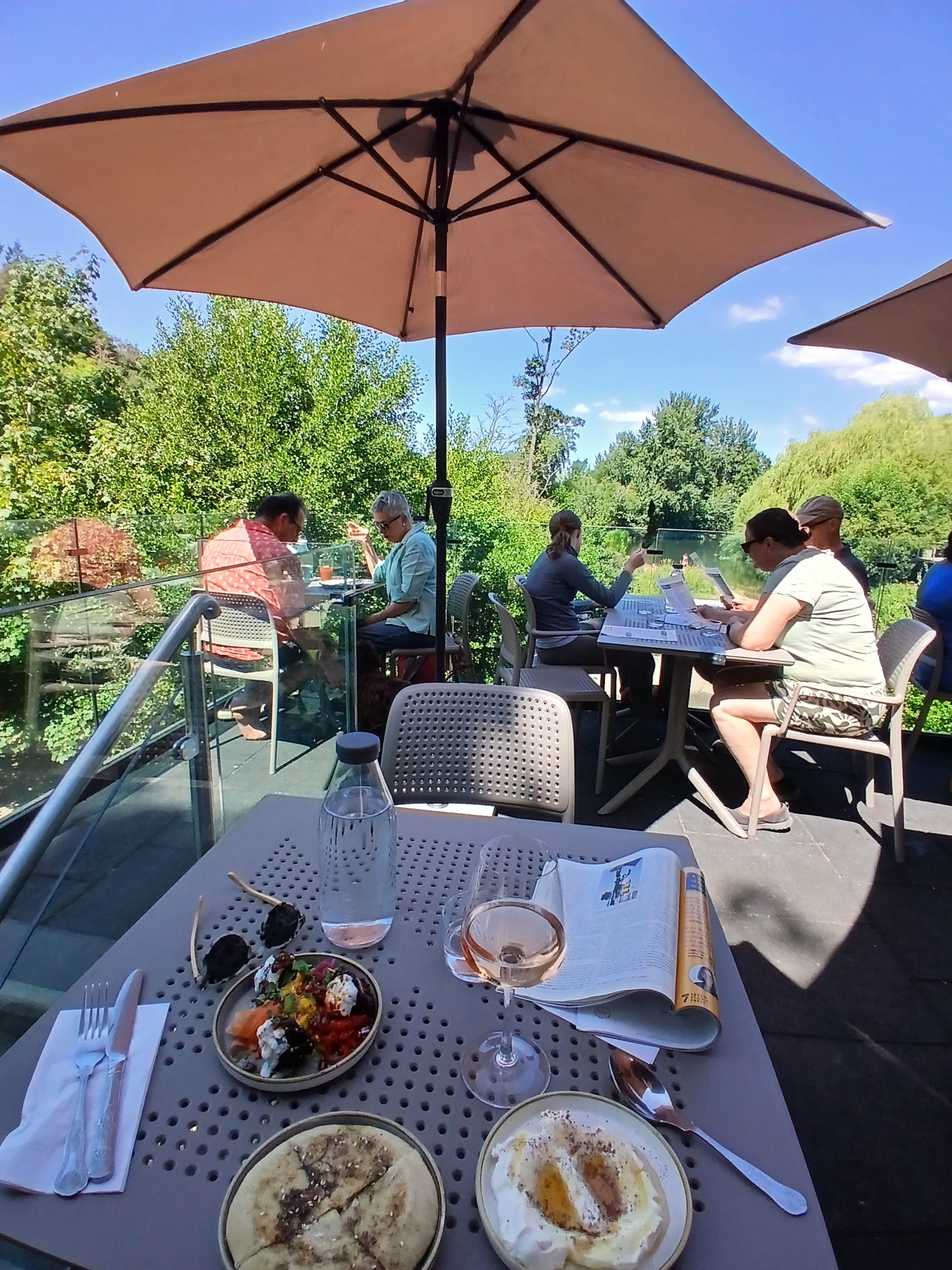
I had a heavenly lunch on a deck above the river.
Wiki describes Ludlow thus:
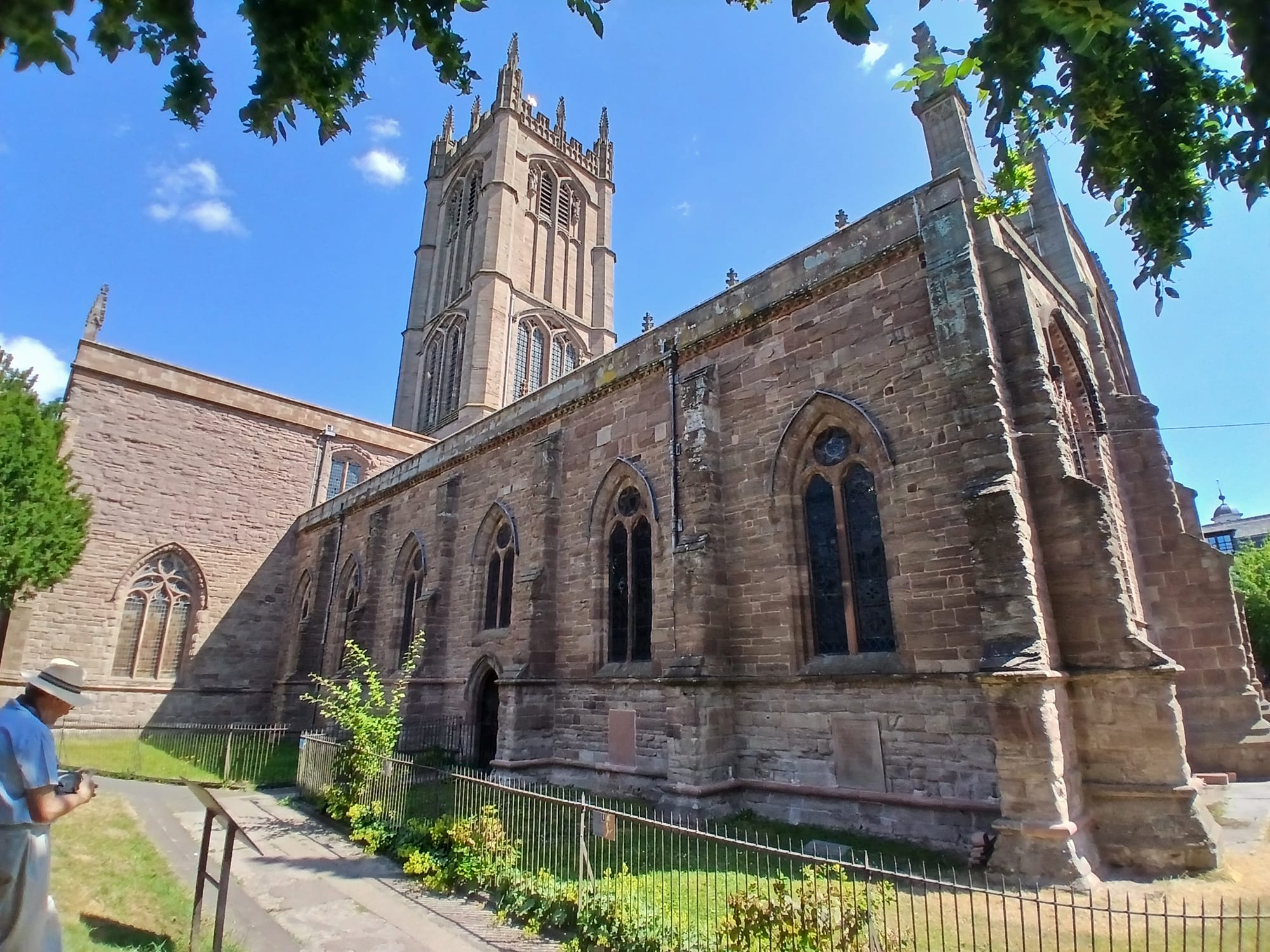
"The oldest part is the medieval walled town, founded in the late 11th century after the Norman conquest of England. It is centred on a small hill which lies on the eastern bank of a bend of the River Teme. Situated on this hill are Ludlow Castle and the parish church, St Laurence's, the largest in the county.[2] From there the streets slope downward to the rivers Corve and Teme, to the north and south respectively.
"Ludlow has nearly 500 listed buildings,[4] including examples of medieval and Tudor-style half-timbered buildings. The town was described by Sir John Betjeman as "probably the loveliest town in England".[5]
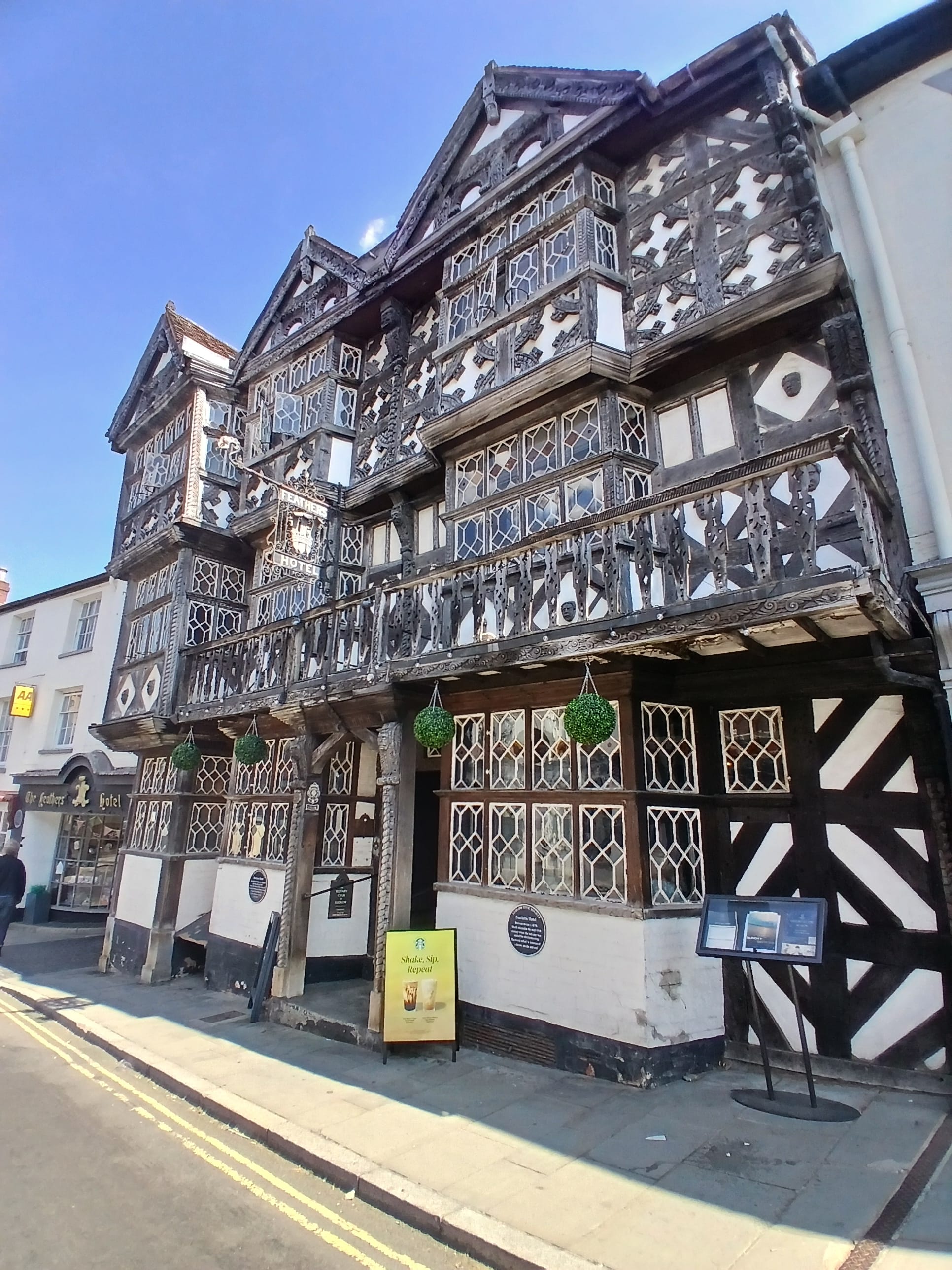
Above is the Feathers Hotel:
"The building was completed in 1619 by Rees Jones, practising attorney from Pembrokeshire who had come to Ludlow to pursue his profession at the "Council of the Marches".[4] The Cambrian Archaeological Association said in 1899, "this is much the most picturesque of all the half-timbered houses now remaining in Ludlow. In adapting it for use as a hotel, none of the old work has been tampered with."[7] The New York Times reportedly named it the "most handsome inn in the world".[8] "
"The timber facade has motifs of Prince of Wales's feathers, from which the inn's name derives.[2] "
The aforementioned St. Laurence's church:
I took a walking tour of the town but didn't enjoy it because it was hot and the speaker, an elderly volunteer, spoke slowly and I just found myself getting sleepy.
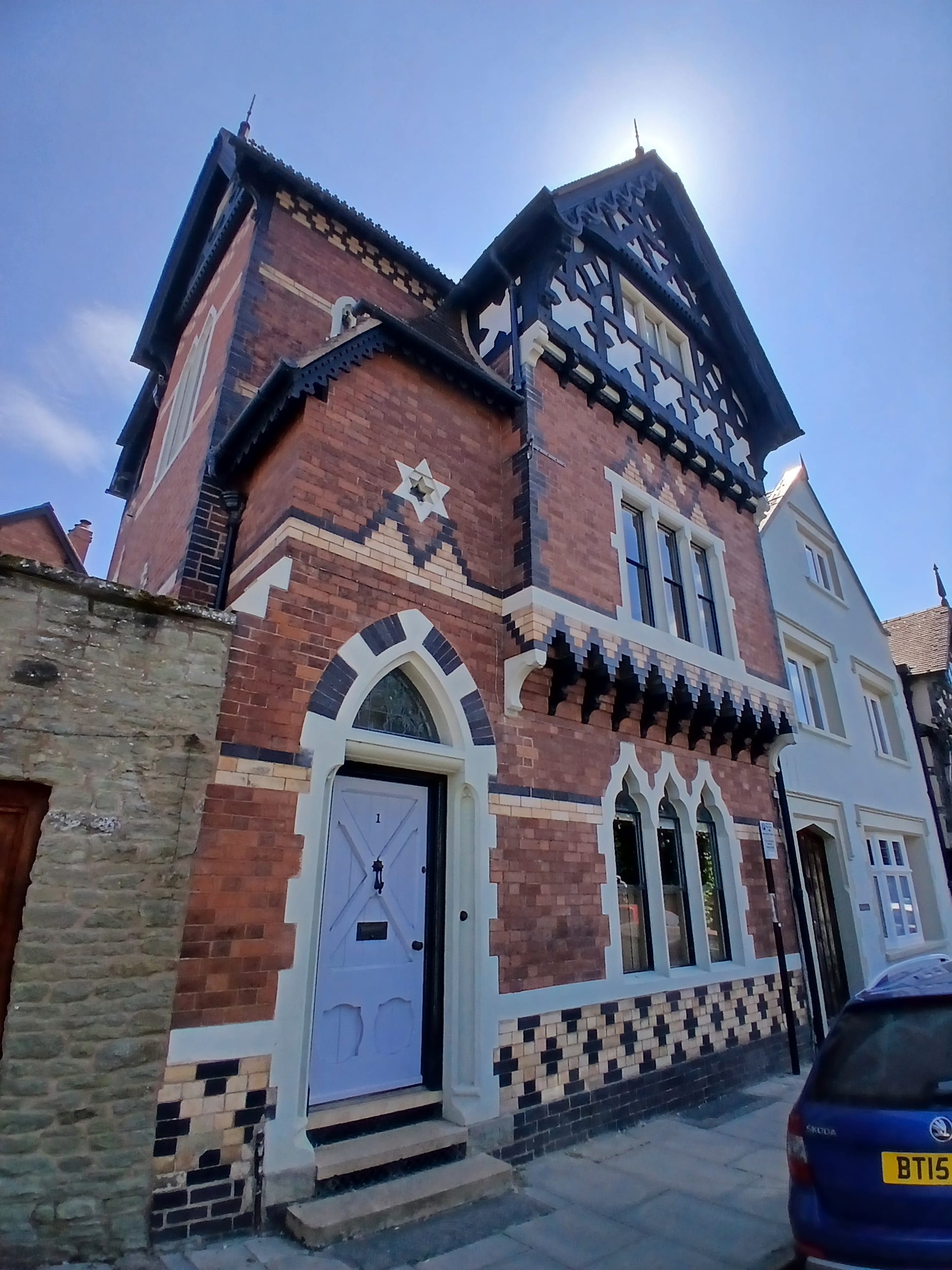
I'm guessing this building is Victorian, as the Victorians loved a bit of fancy brickwork.
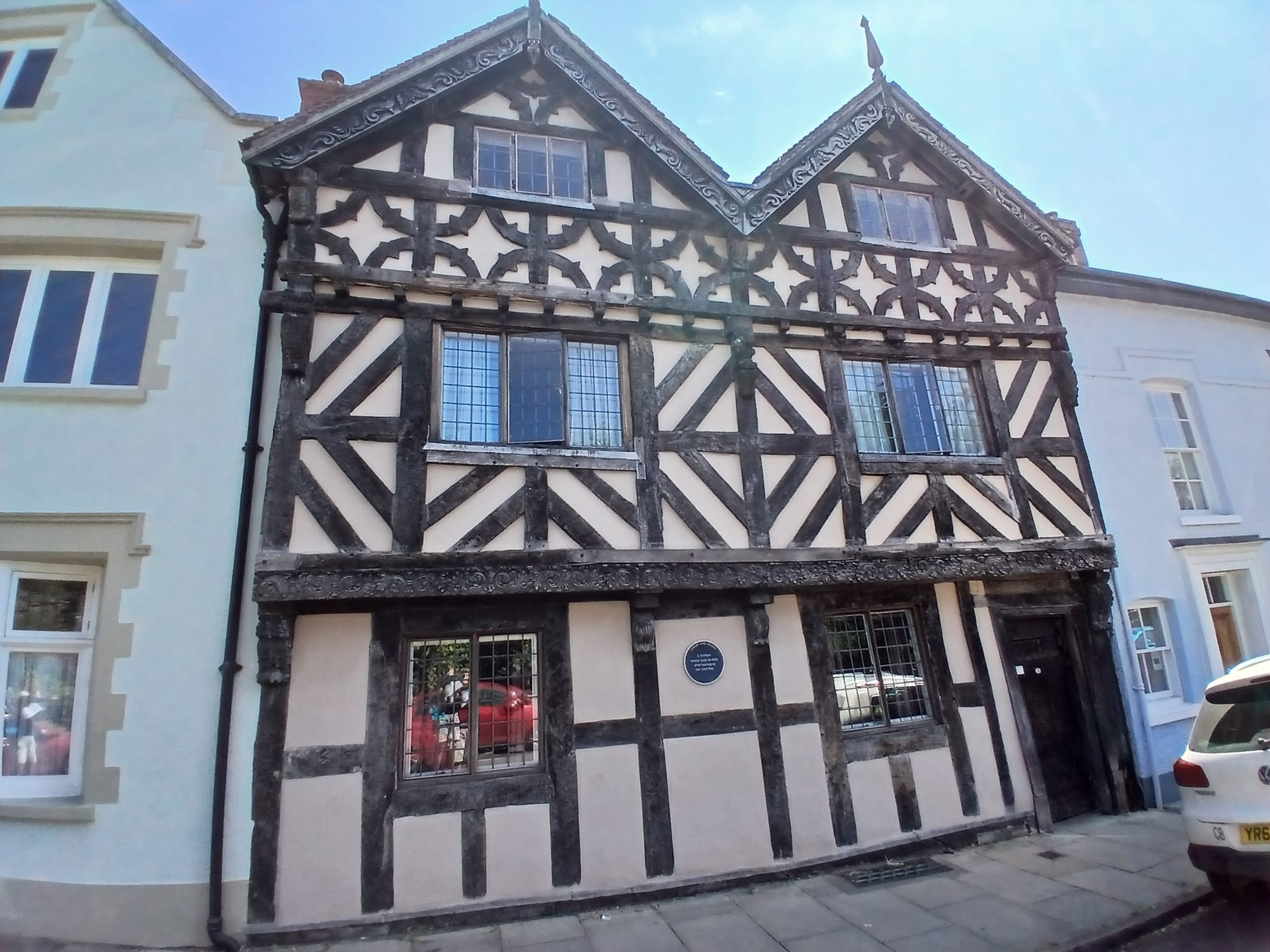
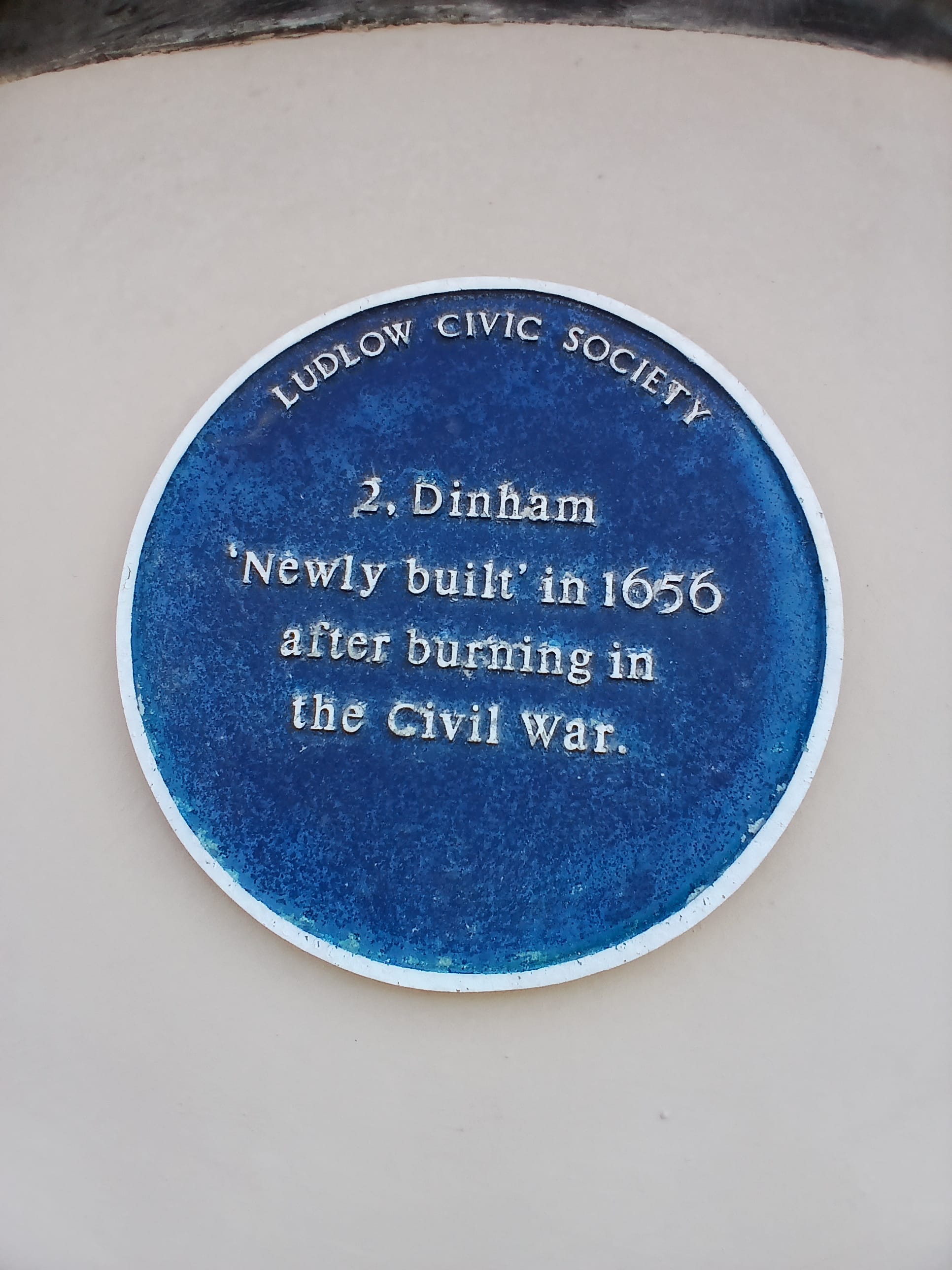
Blue dot on building above is shown below:
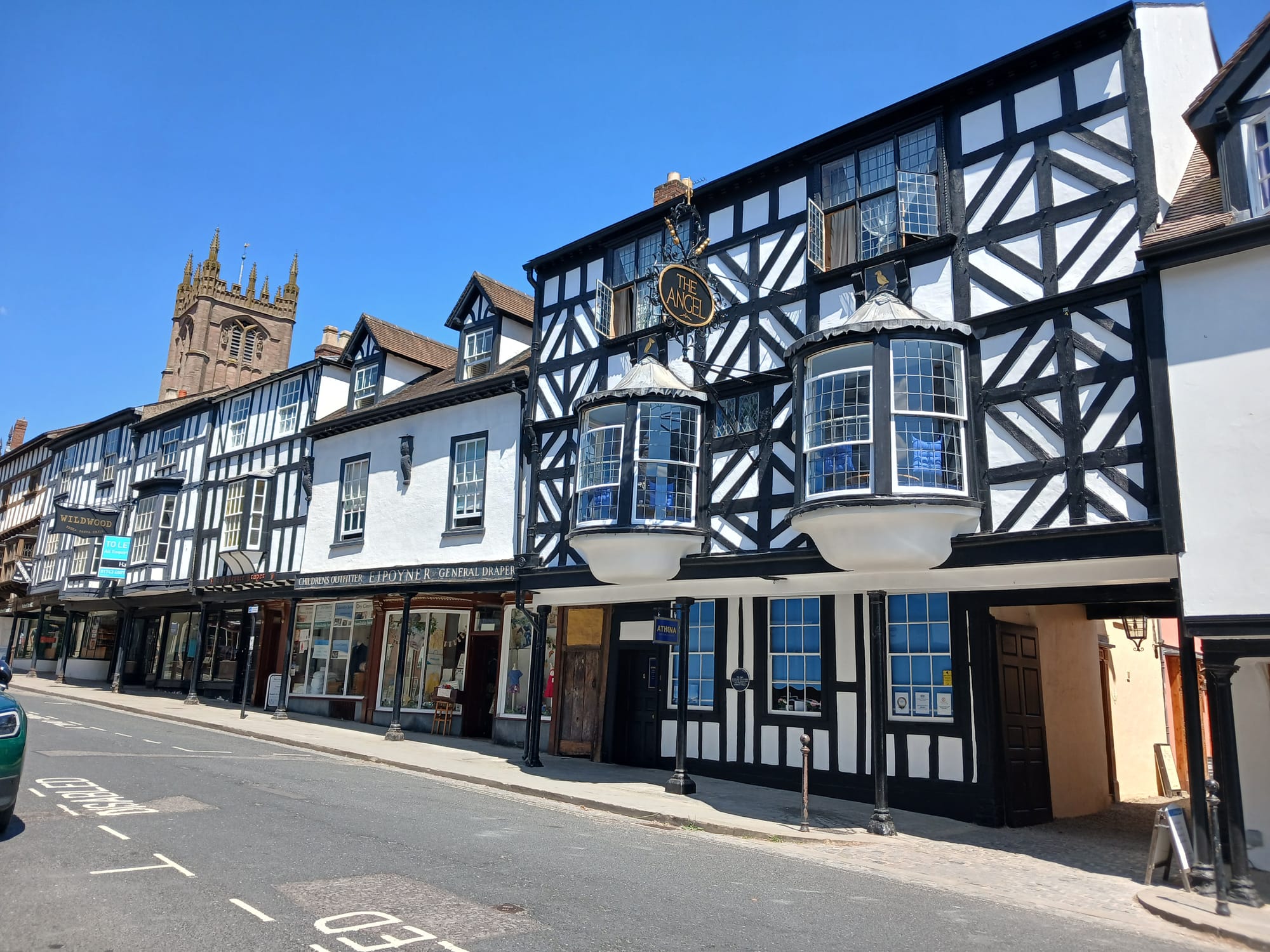
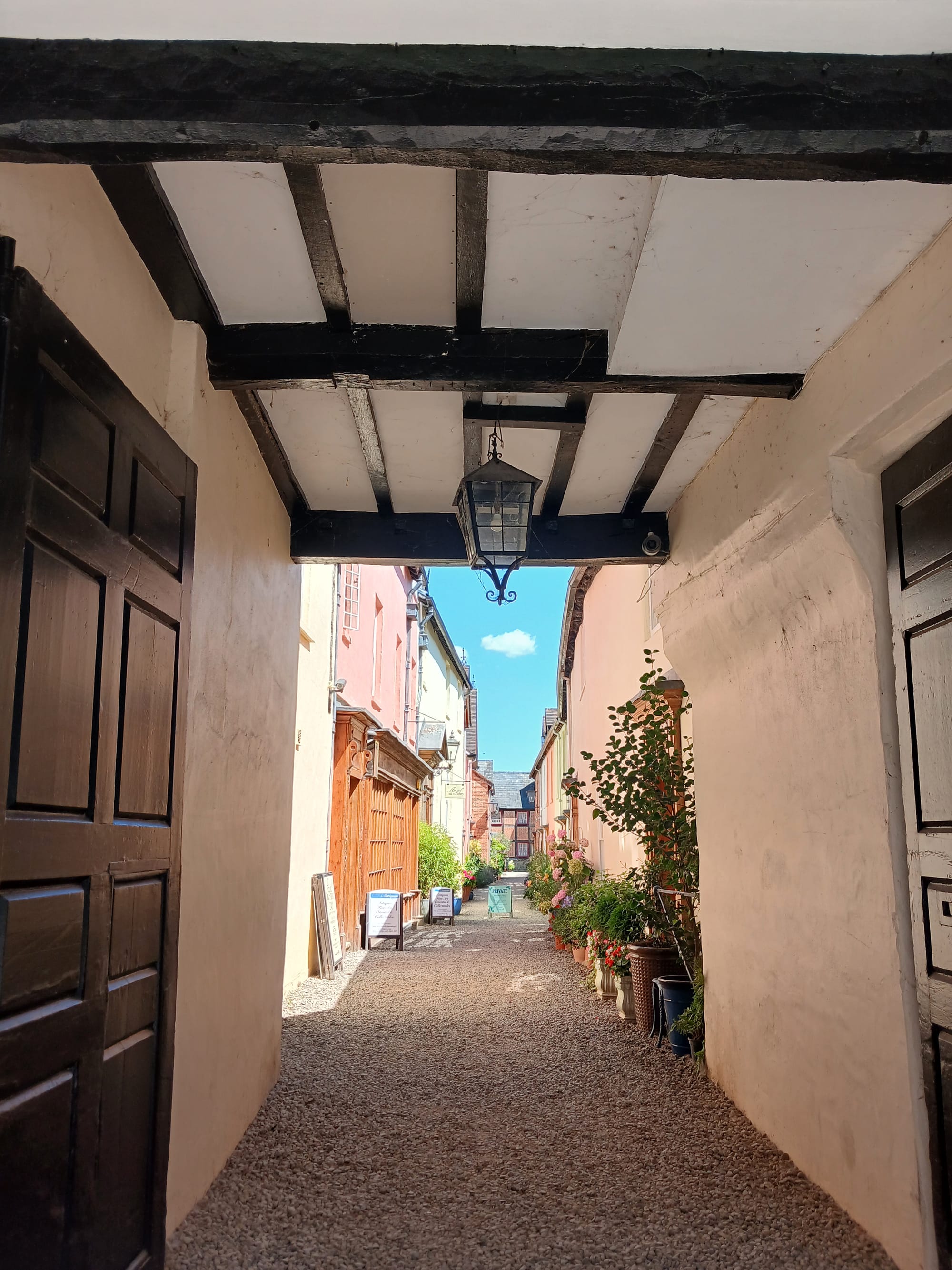
I couldn't find info about The Angel, below, but I love its bay windows, and the alley opening on its right, close up below.
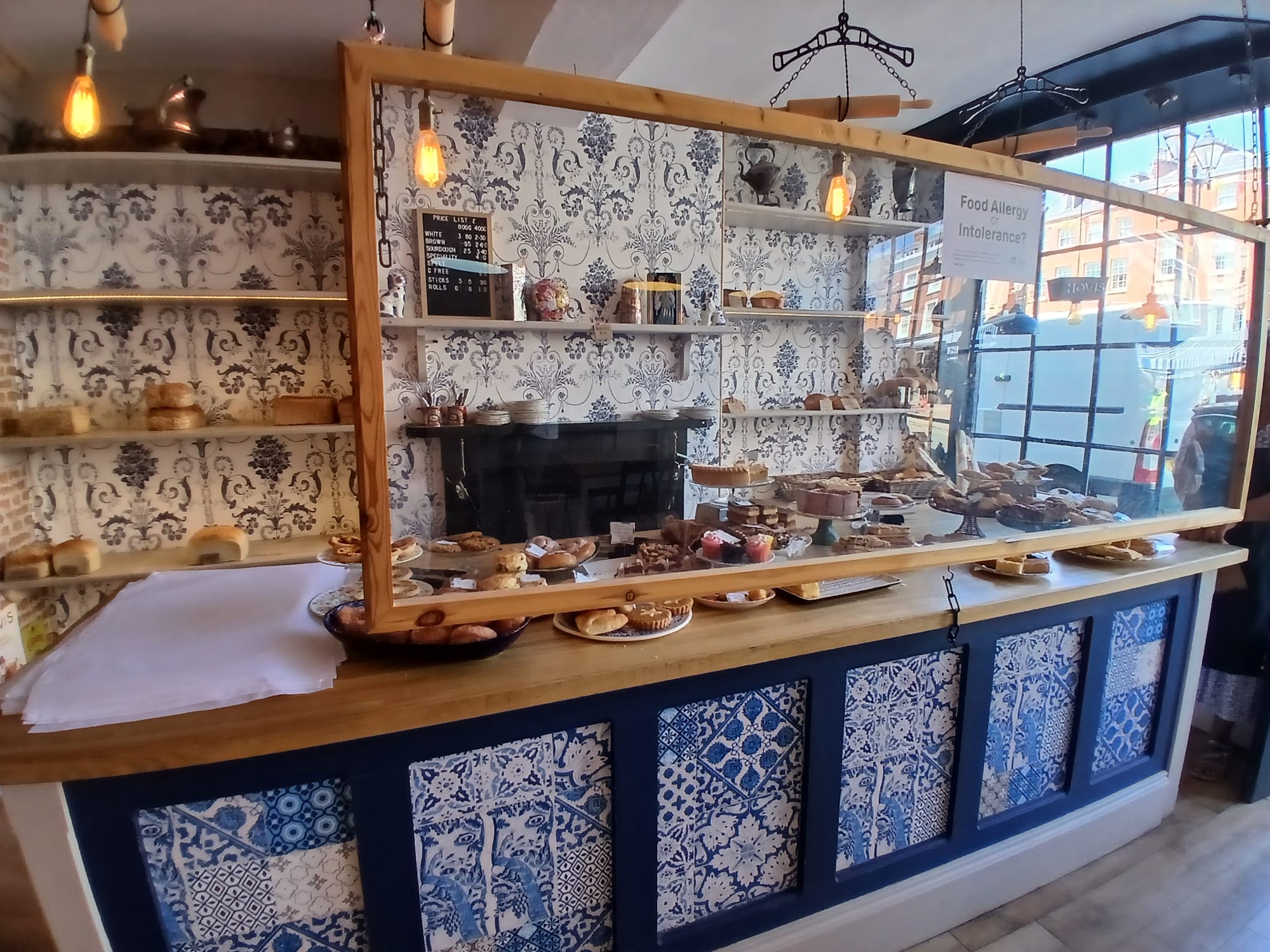
I took this photo of a bakery because it reminds me of mom's kitchen:
I watched some spaniels swimming in the River Teme after lunch.
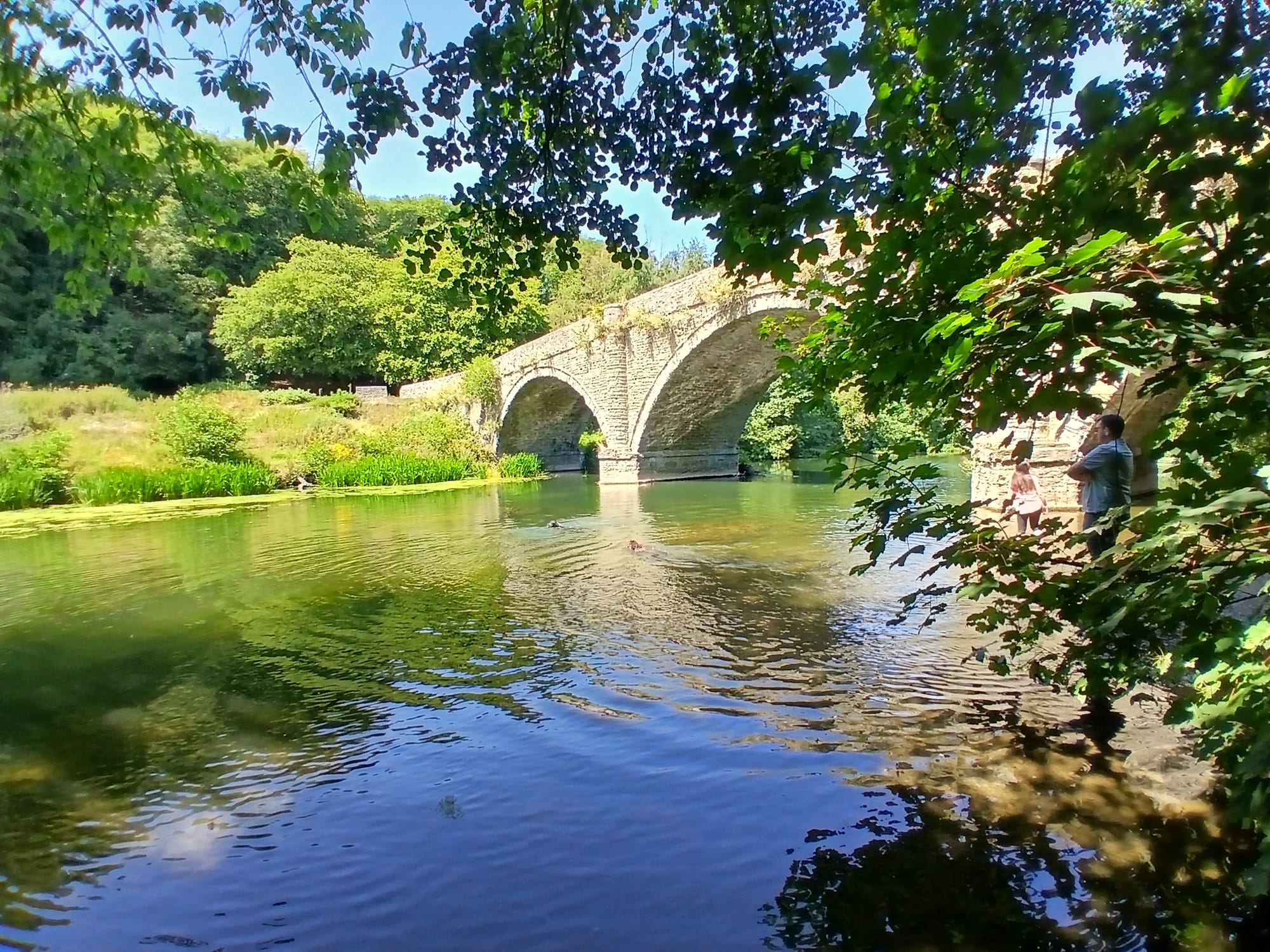
It was a good day out. I mailed mom a postcard then took the bus back to Church Stretton and walked up the steep hill to Long Mynd House.
20 July